

Jharkhand’s Illegal Coal Mining Crisis: Buried Lives, Lost Revenue and a Growing Shadow Economy
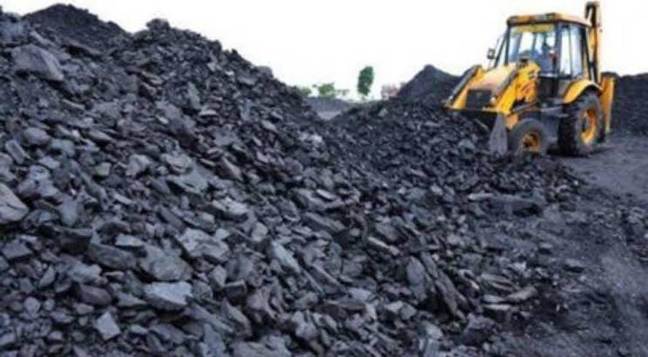
Jharkhand’s identity has long been intertwined with coal. As one of India’s leading coal-producing states, it plays a vital role in powering industries, supporting economic growth, and strengthening the country’s energy security. Yet beneath this legitimate mining ecosystem, a parallel and dangerous economy has flourished for years—illegal coal mining.
What was once viewed primarily as a law-and-order issue has now evolved into a multidimensional crisis affecting human lives, government revenues, environmental sustainability, and the credibility of governance institutions. Recent incidents from Hazaribagh and Ramgarh once again expose the alarming scale of the problem and raise an uncomfortable question: How many more lives must be lost before a lasting solution is implemented?
A Pattern of Tragedies, Not Isolated Incidents
The latest reported accident in Barkagaon, Hazaribagh, where a worker lost his life and others were injured following the collapse of an allegedly illegal coal excavation site, is only the newest chapter in a long series of tragedies. Reports suggest that illegal mining activities were being conducted in the area when the incident occurred.
Just days earlier, four young men reportedly died inside an illegal tunnel near a closed mine in Ramgarh due to oxygen depletion and toxic gases. Before that, three individuals lost their lives when water entered an illegal mine in the Bariatu-Khawa region of Hazaribagh.
While the causes vary—mine collapses, toxic gases, flooding, and structural failures—the underlying issue remains the same: unscientific and unauthorized mining operations carried out without safety standards, technical supervision, or regulatory oversight.
Mining experts often describe such sites as “ticking time bombs.” The workers entering these hazardous tunnels are usually among the most economically vulnerable sections of society, risking their lives for a few hundred rupees a day.
Hazaribagh: Emerging as a Hub of Illegal Mining Activity
Over the years, areas such as Barkagaon, Gondalpura, Badam, Mohanpur, Chanaro, Buchadih, Churchu, Ango, and Keredari have repeatedly surfaced in reports relating to illegal coal extraction and transportation.
The scale of enforcement actions itself illustrates the persistence of the problem:
- Multiple illegal mining sites have been demolished through dozer operations.
- Search and seizure drives have been conducted in forested areas.
- Significant quantities of illegally extracted coal have been seized in recent years.
- Forest authorities have closed numerous illegal mine entrances.
- Dozens of FIRs related to illegal mining and transportation have been registered.
Yet despite repeated crackdowns, the illegal trade continues to reappear, often in new locations and through evolving networks. This recurring cycle points toward a deeper structural issue rather than a series of isolated violations.
Why Does Illegal Mining Continue to Thrive?
Several factors contribute to the persistence of illegal coal extraction in Jharkhand.
First, coal remains a highly valuable commodity with consistent demand from brick kilns, small industries, and informal markets. The availability of cheap, untaxed coal creates a strong incentive for illegal operators.
Second, many abandoned, closed, or undeveloped mining areas lack adequate surveillance and security, creating opportunities for unauthorized extraction.
Third, rural unemployment remains a significant challenge. In many coal-bearing regions, limited livelihood opportunities push local residents toward risky and informal mining activities.
Fourth, illegal mining today is not merely about extraction. It often involves organized networks handling transportation, storage, distribution, and market access. Such networks can sustain operations even when individual mining sites are shut down.
Finally, enforcement actions frequently address symptoms rather than the entire supply chain. A mine may be sealed today, only for operations to resume elsewhere weeks later.
The Hidden Cost: Massive Revenue Losses
Illegal mining is not only a safety and governance challenge; it is also an economic drain on the state.
Legal mining projects generate substantial revenues through royalties, taxes, District Mineral Foundation contributions, and other statutory payments. Large coal projects have the potential to contribute hundreds of crores of rupees annually to the state’s economy while supporting infrastructure, welfare initiatives, and local development.
Illegal coal extraction, however, bypasses every layer of the formal system. The coal reaches markets without royalty payments, tax contributions, or environmental compliance. As a result, the state loses valuable revenue while illegal networks accumulate financial strength.
This creates a paradox where regions rich in natural resources continue to struggle with underdevelopment while the benefits of extraction flow into informal and often criminal channels.
Environmental Damage Beyond the Mine Pit
The impact of illegal mining extends well beyond coal production.
Unauthorized excavation frequently occurs in forested regions, causing land degradation, soil erosion, and habitat disruption. Unregulated tunneling can alter groundwater patterns, increase the risk of subsidence, and weaken the ecological balance of sensitive areas.
The long-term environmental costs are often invisible in the immediate aftermath of accidents but can persist for decades, affecting local communities, agriculture, and biodiversity.
Courts and environmental regulators have repeatedly expressed concern about illegal mining activities in Jharkhand. The issue has increasingly become a matter of environmental governance as much as resource management.
Strengthening the Formal Mining Ecosystem
Industry experts argue that where coal blocks have already been allocated, transparent and timely commencement of lawful mining operations can help address multiple challenges simultaneously.
Formal mining projects operate under environmental clearances, safety protocols, social responsibility obligations, and government oversight mechanisms. They generate employment, contribute revenue, and create a framework for accountability.
However, legal mining alone cannot eliminate illegal extraction. A sustainable solution requires a comprehensive strategy involving:
- Stronger enforcement across the entire supply chain.
- Technology-driven monitoring using drones, satellite imagery, and GPS-based tracking.
- Enhanced accountability mechanisms for local enforcement agencies.
- Alternative livelihood opportunities for vulnerable communities.
- Better coordination between mining, forest, revenue, and law enforcement departments.
- Strict action against organized coal transportation and trading networks.
Time for a Structural Response
The recurring incidents in Barkagaon, Ramgarh, Bariatu, and other coal-bearing regions should not be viewed as isolated accidents. Together, they reveal a deeper structural challenge that threatens lives, damages the environment, weakens governance, and deprives the state of valuable resources.
For years, enforcement has focused on periodic raids, seizures, and closures. While necessary, these measures alone have not been sufficient to dismantle the ecosystem that sustains illegal mining.
The real challenge lies in breaking the complete chain—from extraction and transportation to storage and sale. Unless every link in that chain is addressed simultaneously, illegal mining will continue to adapt and survive.
Jharkhand stands at a critical juncture. The choice is clear: continue reacting after each tragedy, or pursue a coordinated, long-term strategy that protects workers, safeguards natural resources, strengthens state revenues, and restores public confidence in governance.
The next accident should not become the trigger for action. The warning signs are already visible.